Things to do in Monteverde Costa Rica
Monteverde is famous for a reason — its cloud forests are brimming with plants and animals, some of which are most active at night. Monteverde's zip lines and suspension bridges are the longest (and most exciting) in the country, and has a few coffee farms of note.
Up for more adventure? Monteverde has a few of those as well. Don't miss the quaint community establishments and be sure to have a few nice local meals.
Featured Tours
Costa Ricas Monteverde Cloud Forest Reserve is full of life Observe verdant and colourful flora, and a vast assortment of fauna in their natural habitat

Enjoy a literal Sky Trek through Monteverde, Costa Ricas cloud forest as you soar on zip lines, cross suspended bridges, and gaze from an observation tower

Treat yourself to an educational tour and a mighty fine cup of coffee when you go from bean to brew at Monteverdes premier coffee plantation and cafe

This isnt the tree climbing you did as a child Explore Costa Ricas rainforest on this unique Monteverde tree climbing tour, where you scale tree trunks

Explore Monteverde, Costa Ricas Curi-Cancha Reserve on this night tour discover all of the nocturnal creatures you didnt get to see during your daytime trek

Need a destination that offers activities for everyone Look no further than Monteverdes Selvatura Adventure Parkhome of adventure, beauty, and education

Beauty and adventure combine while rappelling down 6 waterfalls in the Cloud Forest. Pure thrills for couples and families.

You're on top of the world with this Selvatura Park Canopy Tour in Monteverde, Costa Rica Soar across a thrilling 2 miles 3 km of cables

Explore Monteverde by horseback and see Costa Rica the old-fashioned way The countrys diverse landscape includes mountains, farm land, forests, and sea views

A little culture can be delicious Learn about Monteverdes agriculture and the production on the Don Juan Coffee, Chocolate, and Sugar Cane Tour

Choose your own adventure on this Monteverde, Cost Rica birdwatching tour enjoy birdwatching, hiking, and rainforest exploration from a selection of 3 forests

Make some unlikely animal friends when you learn all about bats Discover how these amazing and misunderstood creatures are important to the environment

Hoping to see animals during your Costa Rica vacation You wont want to miss the Curi-Cancha Reserve this guided tour will have you spotting birds and more

Make the arduous trip between Monteverde and Arenal, Costa Rica easier with these enjoyable transportation options, which include a boat and horseback

A vacation in Monteverde, Costa Rica isnt complete without a visit to Arenal Volcano Your transportation options even include public transit and horseback

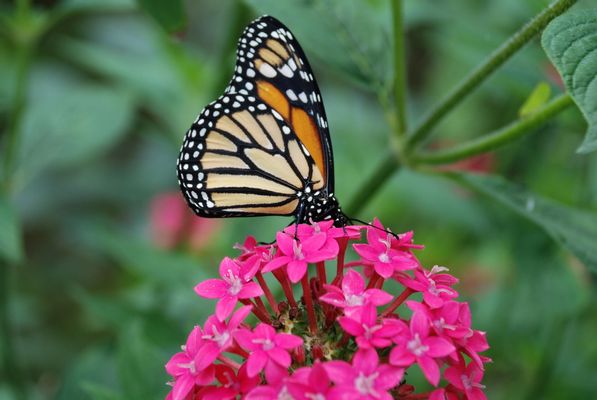
Selvatura's stunning butterfly garden is one of the largest on the continent. At 300ft long and 90ft wide, with a huge 50ft dome ceiling, the giant garden is host to 50 species of butterflies.
Ribbit The Monteverde Frog Pond or Ranario is waiting to teach you about 25 species of frogs, toads, and other Costa Rican amphibians

The intoxicating sweet scent of nature is amplified on this Monteverde Orchid Garden Tour An expert guide will help you find and identify orchids of all sizes

A sweet world of 460 miniature, large, and hybrid orchid species are waiting for you in 3 different sections of Costa Ricas Monteverde Orchid Garden

Learn about the Santa Elena Cloud Forest Reserve, then create your personalized Costa Rican getaway and see its plants and animals in real life

Peek inside oversized terrariums at the Selvatura Herpetarium in Monteverde, Costa Rica Learn about a variety of amphibians and reptiles

Glide along the rainforest canopy at a leisurely pace in the Sky Tram aerial gondola This Monteverde, Costa Rica tour spans 570 ft 175 m in one hour

Sky Walk - a spectacular complex of suspension bridges and trails in the majestic Monteverde Cloud Forest in Costa Rica

Selvaturas Treetop Walkways take you across a series of suspended bridges where you will explore the top of the rainforest canopy and see its inhabitants

Selvatura canopy tour and suspended bridges walk in the Cloud. Selvatura booking quickly online or toll free with friendly locals.

Wish you could explore a tree hollow Satisfy your curiosity on this Monteverde treetop climbing tourscale the inside of a fig tree and rappel down

Things to do in Monteverde, Costa Rica.
There’s a reason why this is one of Costa Rica’s most popular region’s, and it’s because there are so many things to do in Monteverde, Costa Rica. With tours that are both educational and exciting, this is one vacation destination that truly offers something for everyone — children, adults, honeymooners, professionals in need of rest and relaxation…Monteverde is a unique blend of natural beauty and tranquility combined with adventure and adrenaline activities.
It’s also an incredibly ‘green’ town — both in the sense of the great outdoors and sustainable practices. Environmentally friendly practices are one of Costa Rica’s core principles, and many accommodations and local farms do their part to make sure guest and members of the community visit and live with intention and care for the future. Another great thing about Costa Rica? There are multiple options for everyone in your party to enjoy a unique adventure vacation, because our travel experts can help you book hotels and activities that offer accessible travel solutions. Why Travel Agencies Offer The Best Accessible Travel Solutions
Clouds on the ground.
A tour of Monteverde’s cloud forests promises all this and more. Plainly speaking, these forests are the area’s crown gem, and the main reason that most people assent to the grueling car ride up the road leading to Monteverde. However, the trip is well worth it.
Led by bilingual naturalist guides, cloud forest tours acquaint visitors with the ins and outs, as well as the ups and downs, of this unique tropical ecosystem. Typically, a small group will be led along the reserve’s forested trails, combing over plants, trees, insects, and animals as they are encountered. This sort of hands-on, interactive education allows participants to ask questions and receive direct answers.
The guides will encourage participants to use their senses while exploring the forest — to listen for the call of birds, touch the bark of trees, and smell the aroma of tropical flowers. A wide range of animals lives within the reserve, including sloths (both two-toed and three-toed), agouti, jaguars, and several types of monkeys (including the greeting of the infamous howler monkey) — and it’s your guide’s job to help spot as many of these creatures as possible. Additionally, over 2,500 plant species and tens of thousands of insect species reside here as well, providing even more educational fodder for your trek through the forest.
However, daytime is not the only time that Monteverde tours will take you trekking through the forest. Monteverde’s Night tours are equally enthralling, as you’ll encounter insects, amphibians, and mammals that you would otherwise miss during the day. You may see snakes, spiders, porcupines, tree frogs, and more. Night tours depart at sunset, right when these nocturnal animals are beginning to wake up, look for mates, and hunt.
Treks through the sky.
You may be familiar with Costa Rica’s zip lines and suspension bridges, but did you know that they serve a greater purpose than an exhilarating source of entertainment? They give you access to a level of planet Earth that you might not otherwise get to experience. Some 90% of all cloud forest organisms are found within the upper level of the forest canopy. The sunlight is more powerful and direct at the top of trees, and as such, fuels a greater number of species than the shadowy reaches below. Plants cling to other plants, and animals climb to soaring elevations to hunt for fruits and nuts.
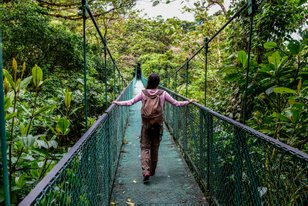
This being the case, suspension bridge tours are a fabulous way to see what these cloud forests are made of. Bridges range both in length and height — some being as long as 500 ft and as tall as 200 ft — and allow visitors to not only peer into the tops of the forests, but also into the thickly vegetated canyons below. Tours can be conducted either with or without a guide and can be enjoyed by people of all ages and all physical abilities.
If you wish to be immersed in the forest but seek a more thrilling experience, then you would be wise to choose a zip line tour. Monteverde has the longest, safest and most professional lines in the country. Sturdy steel cables stretch from one platform to the next, sometimes in and sometimes above the forest itself. Guides equip and instruct all participants before the tour begins, ensuring that everyone feels comfortable and capable. From there on out, all that is required of participants is to be focused and remain calm — gravity will do the rest. Stretching a few miles in length, these cables will have tour takers flying across canyons and above canopies, looking down and out at the priceless views ahead.
Monteverde at your own pace.
You don’t have to be standing or whizzing hundreds of feet in the air to enjoy Monteverde’s spectacular environment. There are Monteverde tours to satisfy everyone you may be on vacation with. Those seeking a more low-key adventure can simply mount a horse and have an equally satisfying experience. Horseback tours give participants the unique ability to cover a lot of ground in a few short hours, thus allowing them to encounter a wide breadth of sights. Savvy guides will lead tour takers to some of the area’s best spots and point out creatures that you might otherwise miss. All in all, a horseback tour is one of the best ways to see a great deal of Monteverde’s wilderness.
Of course, there’s always good old-fashioned walking. When you’re not exploring forests, you can stroll around your hotel’s grounds — many have lovely landscaping and private trails which will allow you to enjoy Costa Rica’s flora and fauna without having to book a tour.


What’s on your Monteverde to-do wish list?
These are just some of the amazing things you can do in Monteverde. If there’s an activity you’re interested in that isn’t listed or you have a particular question about a tour previously mentioned, let us answer your questions. Call us at +1-888-328-5893 or send a message to one of our expert travel consultants.
Video: Costa Rica Tours
Planning a trip to Monteverde has never been easier, so make your travel dreams come true and book your personalized Costa Rica itinerary!